%20PNG.png)
The Power of Physician Associate Advocacy in the US and Abroad
- Jennifer Vonderau
- Apr 6
- 7 min read

Advocacy: The Pulse of Our Profession
The physician associate/ physician assistant (PA) profession is growing continuously, enrolling more students into training programs every year, and is both the #2 profession in healthcare and a huge proportion of the healthcare workforce in the US (NCCPA, US News and World Report, Kaufman Hall). Recognition of the PA profession - its strengths, flexibility, and contributors - stems not just from our clinical skills but from the tireless efforts of professional organizations like the American Academy of Physician Associates (AAPA) and international PA societies.
As we shared in our latest post on International PA Practice, the PA profession is expanding into more countries than the US, such as the UK, Ireland, New Zealand, Australia, Canada, and South Africa. The ability of the PA profession to represent itself and advocate for practice recognition and regulation is thanks to local PA societies. In the UK, that was the work of the Faculty of Physician Associates (FPA), in Ireland it is the Irish Society of Physician Associates (ISPA), and in New Zealand it's the New Zealand Physician Associate Society (NSPAS).
In the US, each state has societal branch of AAPA that focuses PA practice law in distinct legal environments. Advocacy - at the state, federal, and international level - is essential because it ensures that PAs can practice to the full extent of their education and expertise, ultimately improving patient access to high-quality care.

Advocacy in the United States: The AAPA Mission
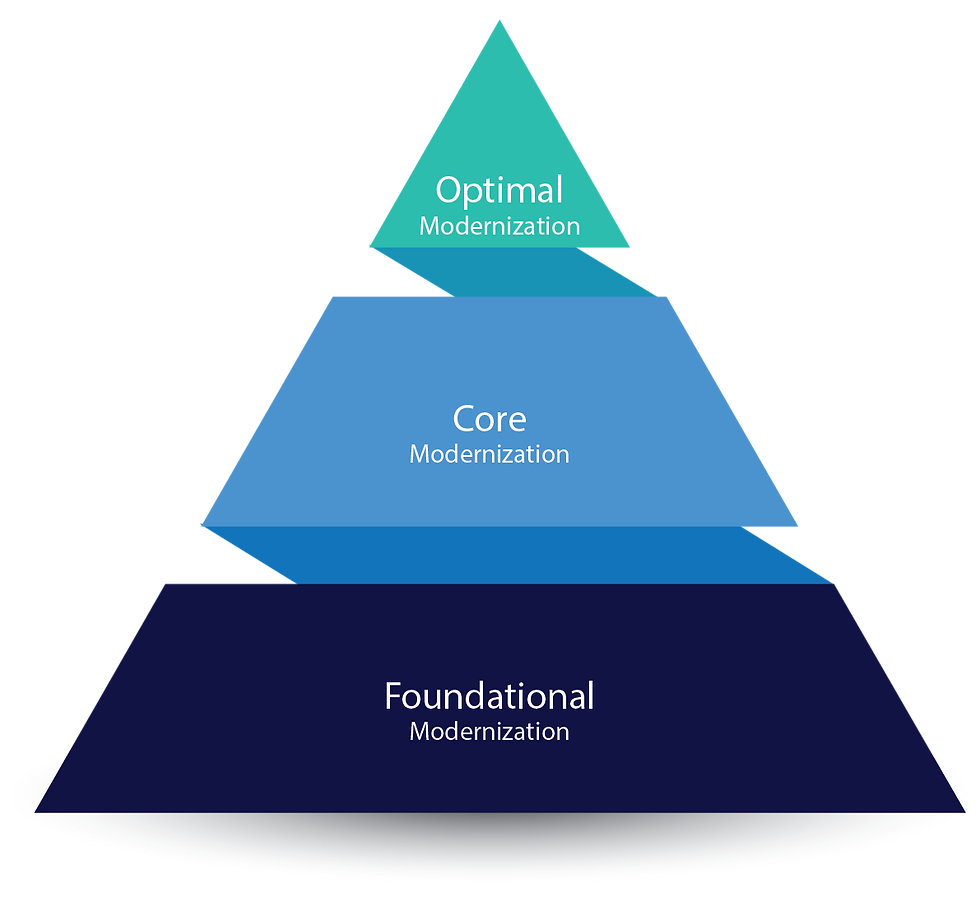
In the US, the AAPA leads the charge in modernizing practice laws. Recent victories include Oregon becoming the first state to officially adopt the "Physician Associate" title and Maryland passing the historic PA Modernization Act, the state's first major update in 25 years. AAPA defines qualities of PA modernization, and Optimal Team Practice (OTP) is a feature of prioritizing collaboration and modern regulatory language. Furthermore, the AAPA is actively fighting against restrictive federal loan caps by petitioning the Department of Education to classify PA degrees as professional degrees.
A Perspective from Ireland: Orla Brett, PA-IC
While the US moves toward Optimal Team Practice, our colleagues in Ireland are navigating a different stage of professional evolution.
Orla Brett, Past President of the ISPA, shares her journey and the current challenges facing the Irish PA community:
My name is Orla Brett, and I'm a qualified Irish-trained physician associate (PA). I completed an undergraduate degree, BSc Hons Physiology, from University College Cork and subsequently graduated in the second cohort of PAs in December 2018 with an MSc in Physician Associate Studies from the Royal College of Surgeons, Ireland.
I unexpectedly came across the PA profession when researching my next career move back in my final year of undergraduate studies. My now husband was reading a Stephen King novel at the time, and mentioned that one of the characters was a 'physician assistant'. A quick google search revealed a new pilot PA programme in RCSI. After some consideration, I applied for the upcoming cohort in RCSI and the rest is history! My twin sister, Aishling, followed suit and qualified as a PA the year after me.
In March 2019, I commenced employment in a large public hospital in Dublin, Ireland, in the Upper GI Surgical Department, where I continue to work today 7 years later! My role includes a variety of tasks and responsibilities including: robotic first assist and surgical assist for both major and minor cases in theatre, assessing and managing patients in our outpatient department, organising and liaising with patients in the peri-operative phase, and communicating with GPs regarding their patients’ diagnosis and plans going forward.
In my earlier years as a PA, I spent a lot of time on the surgical inpatient wards, participating on ward rounds and assisting in the coordination of patient's care, but I naturally moved away from this as I received more responsibility in the elective side of our service. Notably, I was the first physician associate in Ireland to be trained as a robotic first-assist on the da Vinci surgical system, and I was honoured to assist in the first robotic assisted oesophagectomy in Ireland. This transferable skill has allowed me partake in locum work as a robotic first-assist in other institutions in a variety of specialties including bariatric surgery, urology and gynaecology.
I am a passionate advocate for the physician associate profession in Ireland, having served on the inaugural board of directors for the Irish Society of Physician Associates (ISPA) in the role of secretary. After an exciting 2 years of being involved in setting up an ISPA website, creating scope of practice documents, national examinations and continuous professional development criteria etc, my time on the board briefly came to an end. However, I was privileged to be re-elected to the ISPA board as 'President Elect' in 2023 and 'ISPA President' in 2024. I am currently enjoying my role as 'Past President', providing ongoing input to the board, given my clinical experience and previous board experience. I am honoured to continue to play a role with my colleagues and wonderful group of elected volunteers.
Unsurprisingly, as a relatively new profession still in its infancy in Ireland, PAs here are not always directly comparable to those in the US. The PA profession is not yet regulated in Ireland and as a result, we cannot prescribe medication or imaging requiring ionising radiation. Practically, this rarely becomes an issue in practice as I always have a team member or supervising consultant to assist. However, going forward, I am hopeful that with statutory regulation, PAs will be allowed to work to their full scope of practice- whatever that may look like in Ireland. We look up to our US colleagues, who drive us to promote ourselves and our training, to allow us to work to our full scope in the future.
In early Spring 2025, the Health Service Executive (HSE), the provider of health and social care to everyone in Ireland, announced a halt on hiring PAs within the public system and their plans for a six-month independent review, concluding in October 2025. The news of a hiring freeze came as a shock to our PA community and particularly our new graduates. PAs have been working in the Irish healthcare system for numerous years with no patient safety concerns and so, we hypothesise that it is, in part, related to the significantly rapid rollout of PAs in the UK and an attempt to avoid a similar scenario in the Republic of Ireland (ROI). It may also be due to the limited funding for public posts; however, no formal reason has been disclosed to the ISPA. The Irish PA experience is not that of the UK, but many influential medics in Ireland could be influenced by the Leng review 2025.
At present, RCSI is the only institution offering PA studies in the ROI, and as such, we pride ourselves on the standardisation of qualification (MSc Level 9) and maintain small class sizes. The findings of the PA independent review have been submitted to the Department of Health since February 2026. Their decision and feedback are eagerly awaited. We are aware that regulating a new healthcare profession in any country is no easy feat, especially given the clinical responsibilities expected of PAs.
Nonetheless, the ISPA has taken on the role of managing a managed voluntary register (MVR), to ensure both Irish trained and internationally trained PAs meet the criteria to practice in Ireland. We also require ISPA members to maintain and document annual CPD credits and comply with our national exam requirements. We are proud of our two ISPA Conferences in 2023 & 2025, giving PAs and healthcare workers an opportunity to showcase the achievements of our PAs and to also discuss ongoing challenges. This is all in an effort to set deep roots from the beginning, for the high standards we expect from our PA community in Ireland and to allow for a smooth handover to our regulating body- whoever they may be in the future.
During my time as ISPA President, we received positive news of formal statutory regulation for PAs in both the UK and New Zealand. This certainly encourages us to stay hopeful that Ireland will follow suit. Whilst there is no doubt that there will be challenges and bumps along the road, we are determined to continue to showcase the benefits of PAs in the Irish healthcare system and collect evidence-based date to support this.
Thank you to our American PA colleagues for their continued advice, encouragement and support. We welcome readers to visit www.ispaireland.ie.
I also invite your readers to browse the many publications by our PAs and faculty members, including the following:
Orla Brett PA-IC
Physician Associate,
Past President of the ISPA
The Critical Role of the ISPA
The ISPA, established in 2019, represents over 100 members and organizes a Managed Voluntary Register (MVR) to ensure high standards of practice. They are instrumental in providing advocacy, creating scope of practice documents, and organizing national conferences like the ones held in 2023 and 2025 to showcase PA achievements.
Recognizing Orla Brett's tremendous work is just the beginning. Systemic and global advocacy for PAs is crucial to the continued support and growth of our profession.

Role of Advocacy: US vs. Ireland
Advocacy Body | Jurisdiction | Key Focus | Notable Milestones |
|---|---|---|---|
AAPA | United States | Modernization & Title Change | Adoption of physician associate title change Optimal Team Practice (OTP) and modernization |
ISPA | Ireland | Statutory Regulation & Managed Voluntary Register (MVR) | 2023 & 2025 Conferences |

Are you ready to support your profession?
Visit the ISPA Website or AAPA Advocacy Central to see how you can get involved today.


Comments